
Am I a sheep or a goat, or part of the great crowd of the needy? Checking back later in the day.
In the parable, sheep are nice and get to heaven, goats miss out. A quick reading, with no context, makes it sound like works righteousness rules, so that when we do bad things, we go to hell. Yet, the rest of the Bible is about a God of grace, mercy and forgiveness. This parable is as well, because the Jesus who tells this, is about to end up in his own darkness and hell, feeling very cut off from God, as he dies on the cross. In the deepest sense, we can’t fix our own sinfulness. Christ does that for us.
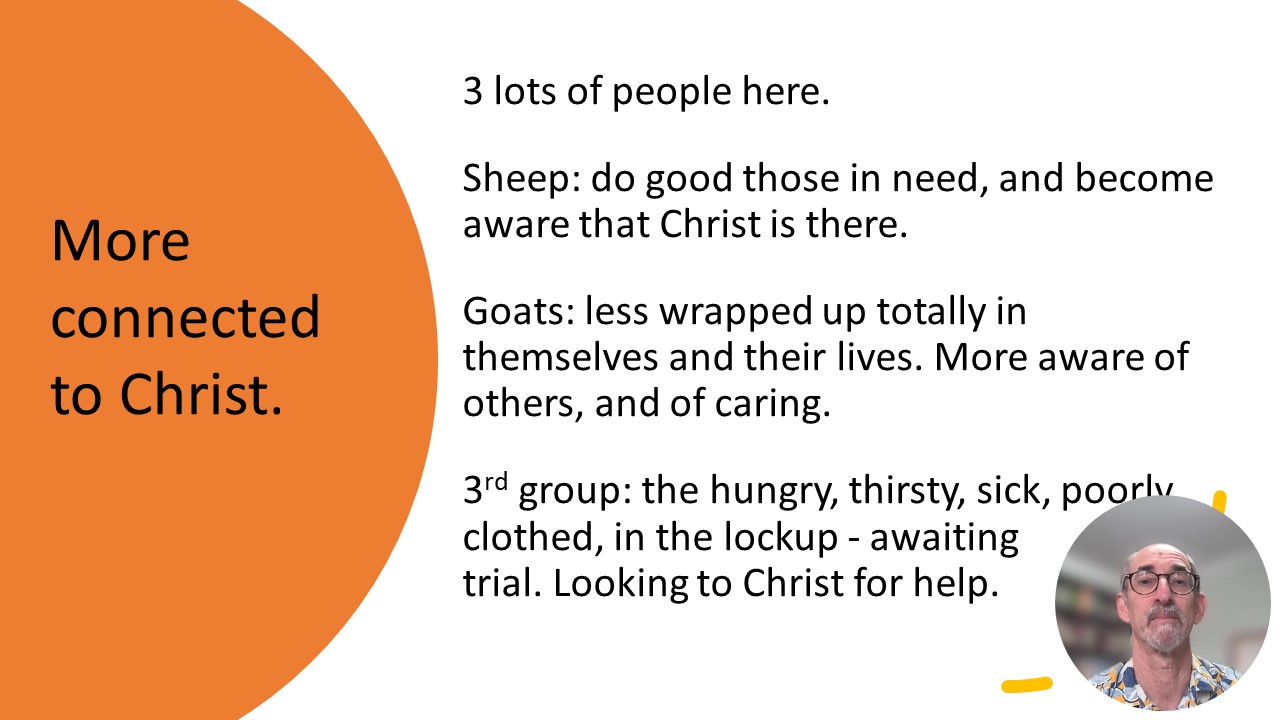
In the parable there are actually three groups. The sheep are the ones who help those in need but have no idea they are serving Christ. The goats don’t help and are horrified to discover they have ignored Christ in the needs of those around them. The third group, which we don’t even realize are part of the parable, are all those who are in need and can’t fix themselves. It is helpful for us to recognize that each of those three groups is a part of us. Thus, we look for ways in which each of those different parts of us can be more deeply connected to Christ.
When we act like the kind, helpful sheep, we are invited to deepen our connection to Christ, so that we are serving others in Christ’s energy and strength. That way we can help more effectively and our own egos or needs don’t get in the way.
When we are unthinking goats, ignoring the needs of others, we trust that the Holy
Spirit will get our attention (with a figurative niggle, nudge or jolt), and that we will become more aware of how others are.
When we find ourselves with big needs that we can’t sort, we go to Christ in prayer, and we ask those around us for help. We don’t try to be superheroes, doing it all on our own strength.
An evening or late afternoon review.
Last week we talked about doing a 2 minutes check in every morning, to discover how we are, and then, with the help of the Holy Spirit, to look for ways to choose more helpful actions if needed.
Near the end of the day (do it earlier if you are carrying lots of distress) pause to notice what has happened to you during the day. Treasure the positive things, and take a time to enjoy them. With the negative or distressing things, don’t get lost again in them or overindulge them. ,Instead, name them and acknowledge that they happened, and the impact. Then look for the invitations to growth, even in the difficult things. There may be clear choices that you will make. “I’m not going to keep going over those words said to me. Instead, every time I find myself thinking about them, I’m going to say in my heart that I forgive you and your words won’t poison me. And I’m praying for you to be happier in a good way.’
