
Easter 2 B 2021 John 20
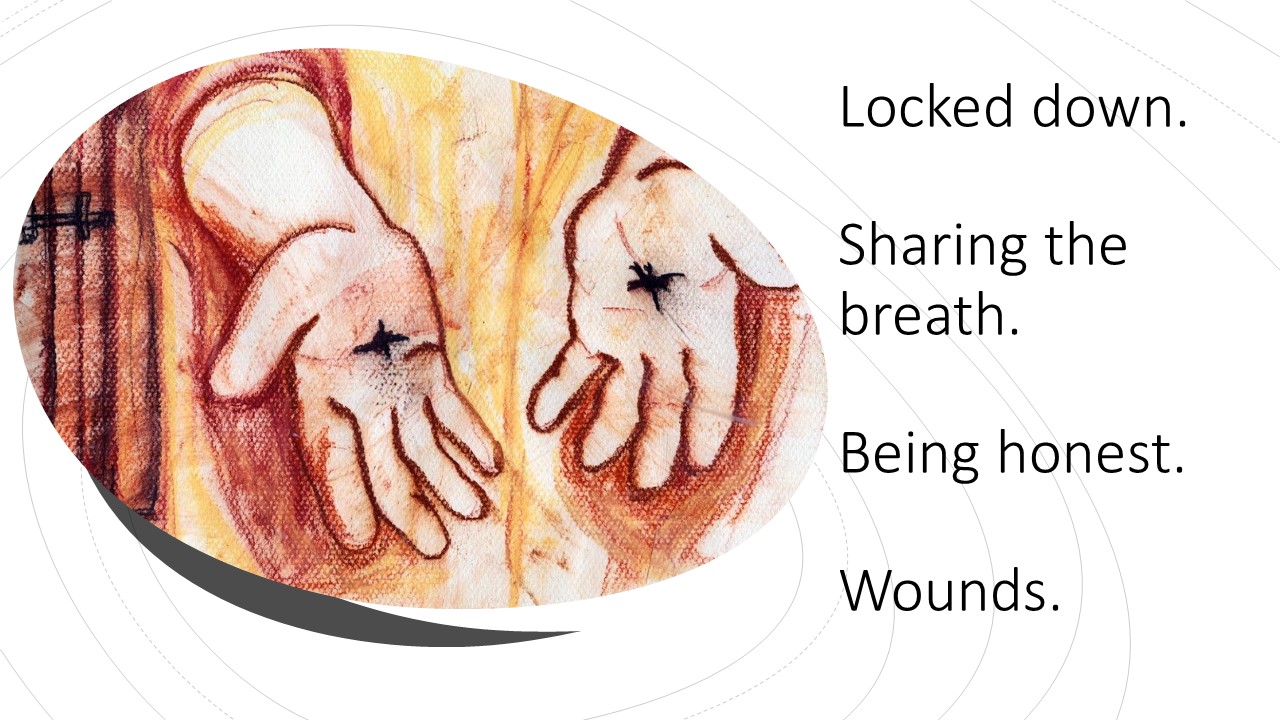
4 pictures: lockdowns aren’t always the right thing. Rubbing noses with Jesus our chief. Being honest like Thomas allows God thinks to happen. We can trust Jesus’ wounds. I am trusting you and the Holy Spirit to take what you need, and let it work in you this week.
Lockdown. Stay in shelter. Vital during a cyclone or bushfire, and now we add pandemic. In schools we have to practice lockdowns in case something or someone dangerous ever came onto campus. The disciples on the first Easter night were in lockdown, because they feared that what had happened to Jesus – arrest and crucifixion- would happen to them if they were seen. They locked down, desperately trying to stay safe.
The parable of the wry-necked pastor
One Saturday in country Esperance I had played hockey on the Saturday. Without even being aware, I had been chasing someone, slipped over, took a tumble, bounced up immediately, and kept on playing. Sunday morning, I woke with my neck stuck to one side. I was a stiff-necked and sorry pastor who led worship that morning, and first thing Monday I was on the phone to the physio, begging for help. I had a wry neck, which she normally saw on farmers who had lifted something the wrong way. I had injured something in my neck, and the muscles had locked down around it to protect the damaged part.
I suspect that is a parable for all of us at some time. We all carry hurts, sometimes very bad ones, and in trying to protect ourselves from further hurt, we lock down and it just makes things worse. And so we go on trying to do life with some sort of locked up neck approach, and that is not good – for us, or for the people around us. Jesus, our physio, needs to work on that locked down area, to unlock the overprotective muscles, and bring us peace and healing. What are the signs that we need help, that things aren’t working for us? Pain that isn’t coming good. Not sleeping comfortably. Cutting ourselves off from others. No energy. My family can tell you the signs that I am not in a good space, and it’s embarrassing because it shows as swearing, and getting in a flap. When it’s really serious, I will just go very quiet, and not want to go out at all. In those very serous things, I need to talk with those closest to me, I need to work through the consequences, and I need to be firmly grounded in love – forgiveness and acceptance from Christ, and acceptance and support from those closest to me. We all need Easter life in our wounded places.
Sharing in the one breath.
Jesus breathes on his fearful locked-away disciples. We can think of God breathing life into Adam, in Genesis 2. In the Narnia books, Aslan breathes on Lucy, to give her more courage. In Rotorua, when we went to a Maori tourist village for the evening entertainment, we had to select a ‘chief’ from our busload, who would be formally greeted the Maori way. They shared the one breath, as a sign of peace, that we were welcome and would be shown great hospitality.
What does it mean – that Jesus shares his breath with you. As you breathe in his breath, what are you receiving.
As you breathe out, what is being released?
Breathe in, breathe out. Breathe in, breathe out.
That could be your prayer exercise this week, allowing Jesus to rub noses with you. Allowing yourself to breathe in his breath, to breathe out what needs to be breathes out.
Now we turn to Thomas. He has often been labelled Doubting Thomas, and that is not helpful. He is a model for each one of us, for healthy engagement with God. What helps us grow as Christians. 1. Being honest, as honest as we can with ourselves, about how we are. Thomas was honest with the other disciples. He might have been frustrating to be with, but Thomas wouldn’t budge. ‘This is where I am at.’ He didn’t exactly make it a prayer, but he certainly put it out there. And Jesus happily responded, far more than Thomas probably wanted. He wasn’t put off by Thomas refusing to believe that he was risen, just as he wasn’t put off the week before by the rest of the disciples who had refused to believe. He came and stood among them.
There is an important pattern here that we are to follow.
1. Be honest, and name what is happening inside us, or where we are at. Be as honest as you are able to be.
- Put that into a prayer. Don’t just let it roil around inside you, or come out in ways that cause harm to you and others. Put it out there in a helpful way. For Christians, that includes to pray it. There are times when we might need to shake a fist at God, quite literally, or punch something safe as hard as we can, while we speak out what is inside us.
- See what happens. I imagine Jesus taking great delight in fronting Thomas, and insisting that Thomas place his hand in his side. Being honest, and putting it out there, allows God to make the next move. It might be very beautiful and very unexpected, but it will happen, and it will be good.
Be as honest as you can, as real as you can. Put it out there as a prayer. See what happens next. There will be a response from God.
The wounds of Christ are vital for our healing
Which brings us to the risen Jesus, who insisted on showing them his hands and side. The wounds very visible. Easter does not mean perfect, as in untouched. Jesus’ perfect is vey much touched, by the cross, by human sin and grief, by what was done to him. He carries that for us, in a way that brings new life. What does it mean, as Jesus reaches out to hold you, that he still carries his wounds?
There are some good poems waiting to be written. There is yet another possible devotional time for you this week – picture yourself with the Easter Jesus, being held by his hands, or even, reaching in and touching his side. Which is still healing.
Possible God homework.
- Ask Jesus about what is locked down inside you that needs his healing presence.
- The breath exercise. Allow the risen Jesus to rub noses with you. Breathe in his breathe and strength and healing, Breather out. Breathe in. Breathe out.
- Be like Thomas. Be as honest as you can about how you are. Put it out here as a prayer. Be surprised as to how the God of life responds to you, personally.
- The wounded Jesus, reaching out to hold your hand.
These exercises are not just about feeling good. They are about you being healed and worked on. That then leads to healthier actions by you this week.
