
You are called to freedom. Galatians 5:13
German Lutheran pastor and theologian, Dietrich Bonhoeffer, was executed by the Nazis in the dying days of WW2, for actively plotting against Hitler. From 1933, before many others took any action, he actively spoke out against Hitler and his false Christian veneer. Freedom, for Bonhoeffer, did not mean playing it safe and protecting his own life. It meant searching out God’s will, putting it into practice, and trusting that God would look after him. Bonhoeffer believed that freedom was not about doing whatever we felt like – it was about right connections to others.
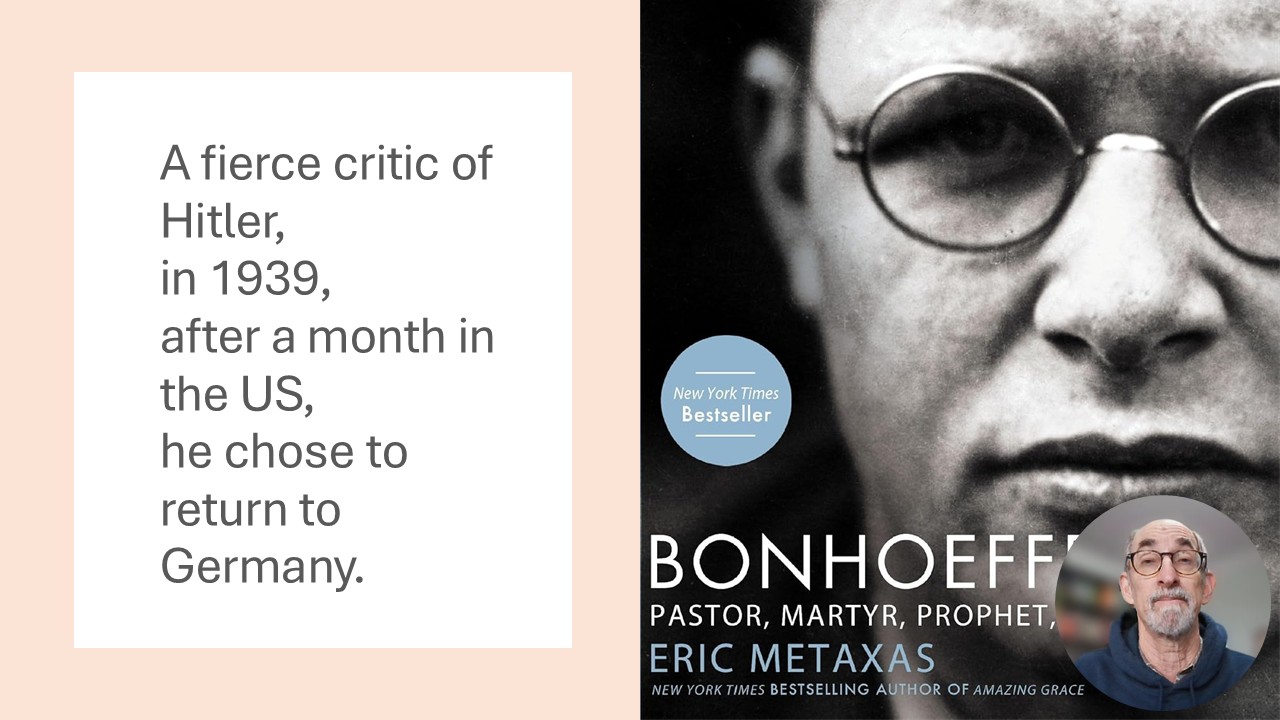
In 1939, he had the chance to stay safe in the USA. Many encouraged him to do just that, but he believed that supporting his Christian brothers and sisters meant going back home to be with them. He caught the last boat back just before WW2 began. To offer him some protection, his friends arranged a position in the military intelligence unit that was clandestinely working to oppose Hitler. He saw Hitler as so dangerous to so many people, that he believed it was his Christian duty to actively work against him. Bonhoeffer believed that decision was part of his Christian freedom, and he had a good conscience about that.
At the beginning of 1943 he became engaged to a much younger woman. Then he was arrested three months later. The engagement continued with occasional prison visits and lots of letters. Coded messages from family informed him of what the investigators were finding out about him and his co-workers. As the bombing over Berlin intensified, inmates and guards turned to him for comfort and support. There was a peace about him that was so appreciated.
When the bomb plot against Hitler failed, Bonhoeffer’s situation became much more precarious. In his poetry and writings, he consciously entrusted his loved ones to God, because he himself was powerless to help them. As the end came closer, he knew that death would be the final step on the road to freedom. Then he would see the face of God. He was executed on orders from very high up, just before the war ended.
We could say his life ended tragically, but Bonhoeffer saw himself as free – free to work in love to replace Hitler; free to trust that getting engaged in the middle of war was not stupid or selfish; free to trust that while he was imprisoned, God’s good plans were still slowly working; and free to trust that death was not the end of his life, but only the beginning.
May we discover that freedom may mean committing ourselves to act or support in difficult situations. May we discover that freedom means good connections with others.
