
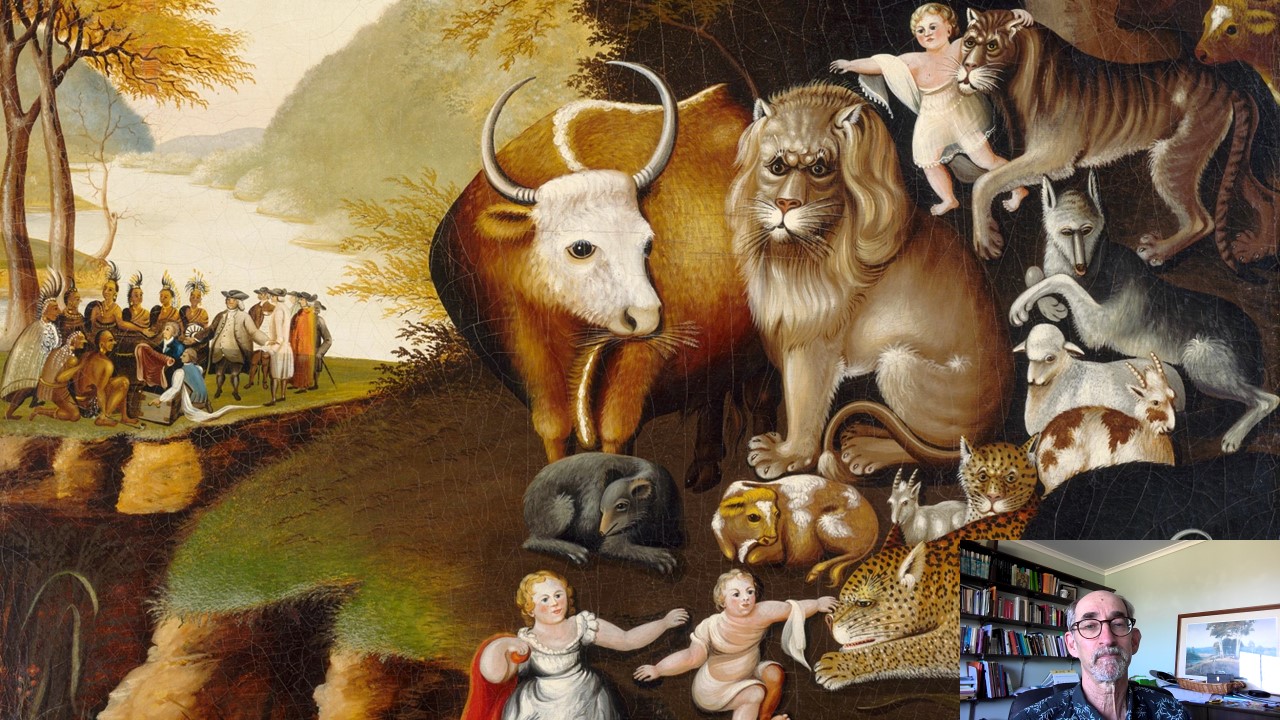
The Peaceable Kingdom.’ Painting by Edward Hicks
The wolf will live with the lamb,
the leopard will lie down with the goat,
the calf and the lion and the yearling together;
and a little child will lead them. Isaiah 11:6
American Quaker, Edward Hicks, painted this around 1830. He looked back to the peaceful history of the founding of Pennsylvania – a respectful treaty with First nations people that lasted for the lifetime of William Penn, but then was broken as people grabbed land. As Hicks got older, and experienced a major split in the Quaker community, his hopes and dreams of peace became more tarnished.
How do we hold on to the hope of peace, and communities and families working well together, when we experience the exact opposite? We look to live in ways that are healing, rather than making things worse.
We find ways to live with our pain, without letting it take us down.
- Prayerfully practice bringing ourselves and our situation to God. We hand that over to the God of grace and mercy to work on, rather than keeping our own ‘death grip’ on it.
- We ask for help from others. We never do it all on our own. Of course we are happy to help others when they ask, and when our heart goes out to someone in pain. There are times when we have to actually ask others. If the first person isn’t in a position to help, we ask another. Sometimes that help needs to be professional.
- Gratitude. Even in the most challenging times, find something to be thankful for.
- Look for beauty. When you need it, it will be given. A smile. A sunset. The breeze on your face. A flower or shoot growing out of a hard place.
- What is the one thing needful? So often we have a lot happening to us. Find one thing to start with or work on.
- Help someone else. Simple acts of helping or service are vital, but only do what you have the energy and strength to do. If there is no joy in that for you, then don’t do that.
